End-to-end UX project: from user research and problem framing to lo-fi and hi-fi prototypes, fully tested and validated. Now entering the development phase to build the real app. A cooking companion designed to solve the 60% recipe abandonment problem.
Start Exploring ↓SageBook is more than a recipe app. It's your personal kitchen guide that combines the warmth of a handwritten cookbook with the clarity and support of an experienced mentor. With SageBook, cooking becomes a mindful, rewarding experience. You gain knowledge while preparing delicious food, and every meal strengthens your skills.
The idea came from real people's frustrations: countless failed recipes, wasted ingredients, and the feeling of being lost when instructions skip essential details. SageBook fills in these gaps with step-by-step guidance, helpful visuals, and a friendly tone that reduces stress.
The entire experience is wrapped in a cozy, cottagecore aesthetic: soft colors, gentle illustrations, and textures that feel familiar and comforting. Users don't just cook — they become part of a story, building confidence with every meal, celebrating small victories, and sharing knowledge with a supportive community.
Solo UX project — I led the full process end-to-end: defining the problem space, designing and running surveys, conducting user interviews, building personas, completing a competitive analysis, producing a lo-fi prototype, designing a hi-fi prototype, and conducting thorough usability testing on both. Both prototypes have been extensively tested and validated with real users.
Every design decision in the prototypes traces directly back to a specific research finding. That thread is documented in full on the Design Decisions page.
💱 View the Hi-Fi Prototype: SageBook Figma Prototype
Modern cooking resources often overwhelm beginners and frustrate intermediate cooks. Standard recipes assume you understand culinary terms, timing, and foundational techniques. One misstep can mean ruined food, wasted money, and a sense of failure that discourages trying again.
Surveys showed that over 60% of new cooks quit halfway through recipes due to unclear instructions or missing context. Online videos can help but lack personalization, leaving viewers to guess adjustments for their own kitchens and tastes.
What's missing is a patient, step-by-step mentor — something that guides people in the moment, explains why things matter, and gives supportive nudges instead of overwhelming checklists. That's where SageBook makes a difference.
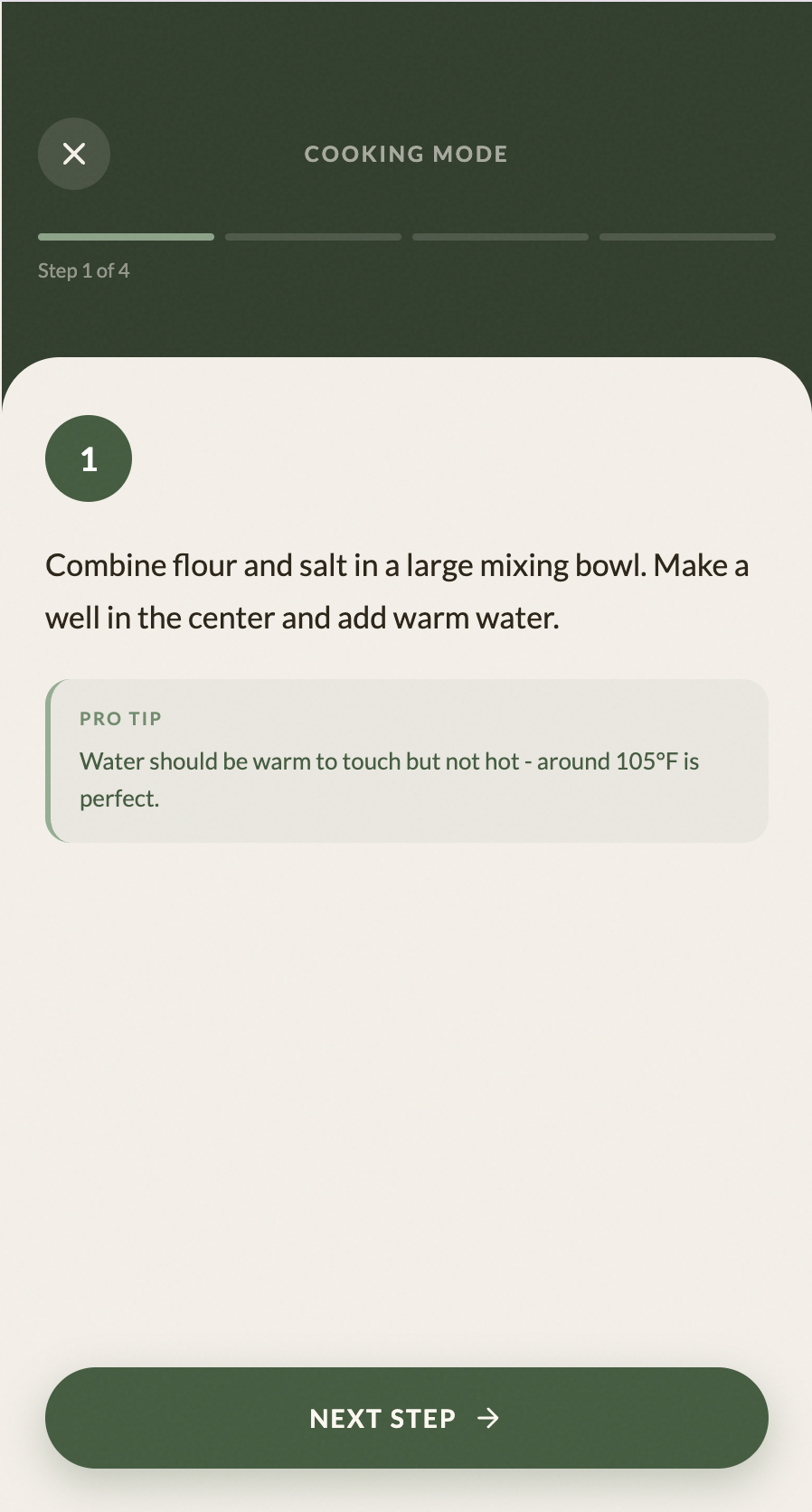
SageBook's step-by-step feature breaks recipes into precise, manageable actions. Each step includes clear instructions, ingredient checks, timing cues, and cautionary notes for common pitfalls. You can swipe forward or backward without losing context, ensuring you never feel rushed or confused.
This approach is especially helpful for multi-step or advanced dishes like pastries, sauces, or bread making, where missing one detail can spoil the outcome. It's like having a calm friend reading the recipe with you, pausing when needed.
Chosen because surveys showed 60%+ of new cooks abandon recipes mid-way — not from lack of skill, but from losing their place or hitting a step they don't understand.
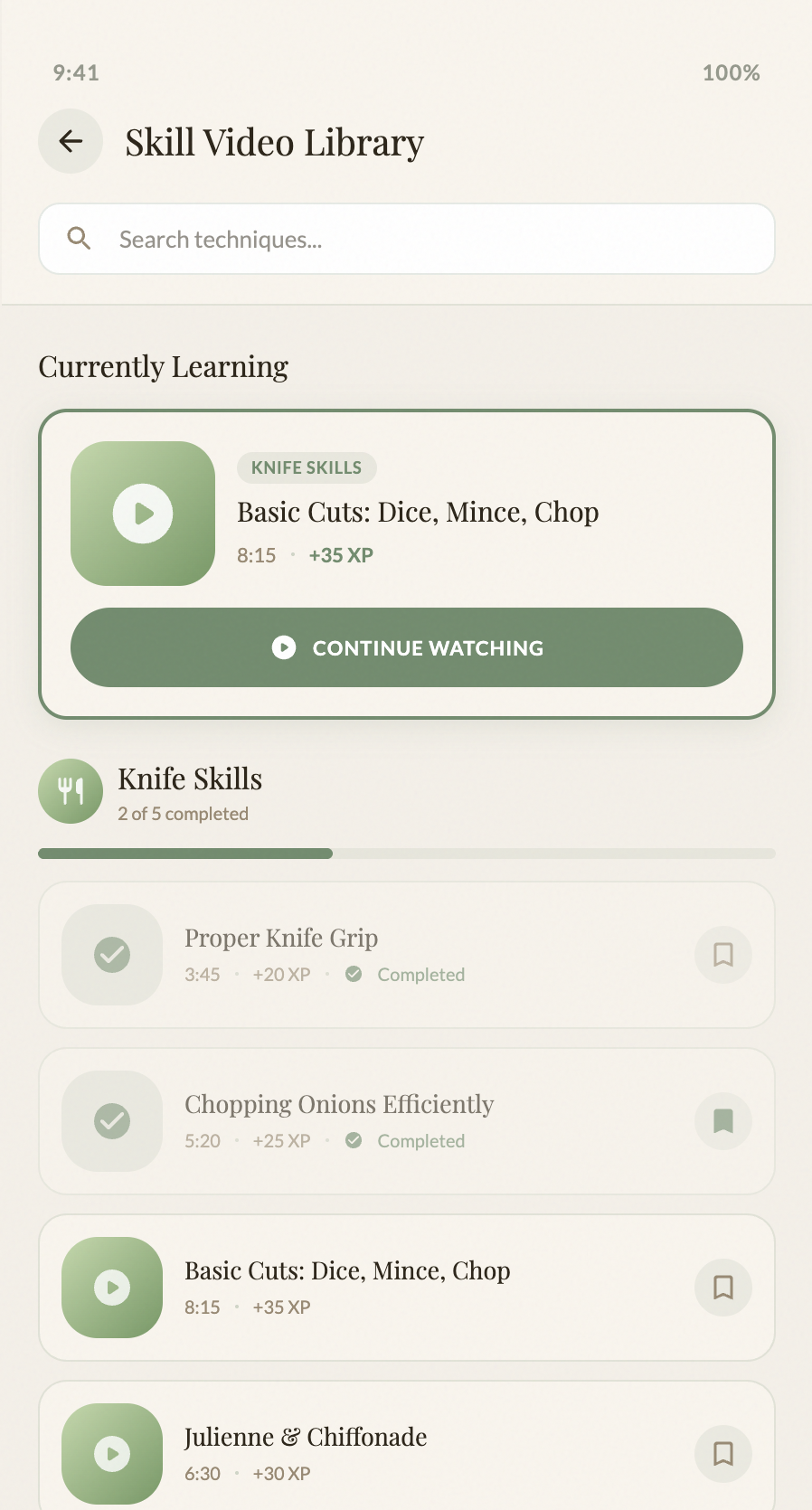
SageBook includes a rich library of bite-sized skill videos. From mastering knife grips and chopping onions efficiently, to advanced pastry techniques and temperature control, these tutorials build confidence fast.
Each video is paired with visual cues and practical tips. Users can bookmark favorites, practice skills separately, and revisit techniques anytime — no need to scroll through long, irrelevant cooking shows on YouTube.
Driven by interviews with the "Carlos" persona — experimental cooks who want to understand the why behind each technique, not just follow instructions blindly.
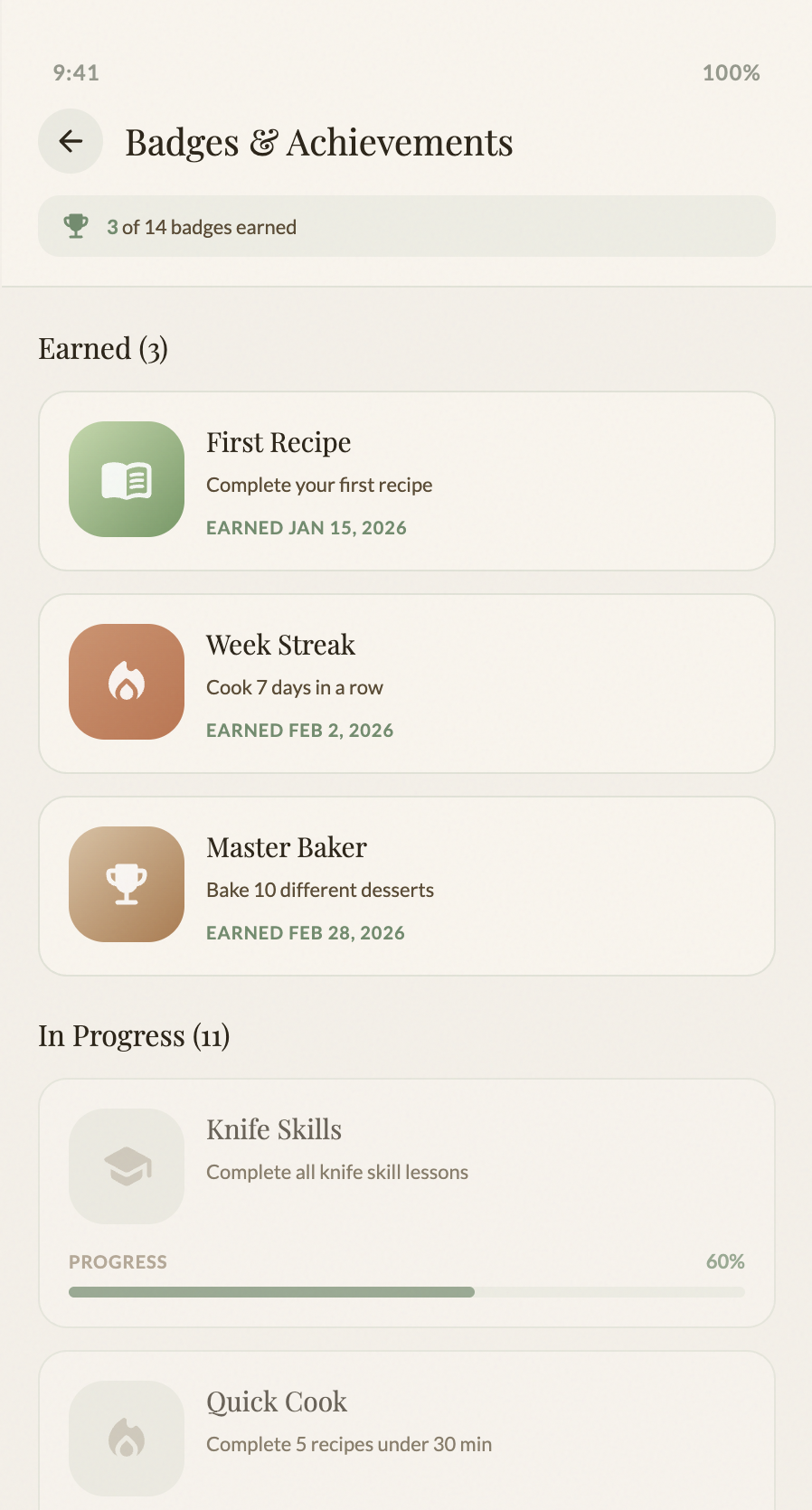
Motivation is key to developing a habit. SageBook gamifies the learning experience with badges and milestones. Complete your first dish? Earn a "First Feast" badge. Master a tricky technique? Collect a "Skill Star" badge.
Users also see progress charts that highlight improvement areas and achievements, turning cooking into a rewarding journey. It feels like leveling up a character — except the hero is you.
Designed across three motivation tracks — encouragement, technique mastery, and time-saving — because persona research showed a single reward system can't serve beginners, experimenters, and time-poor parents equally.
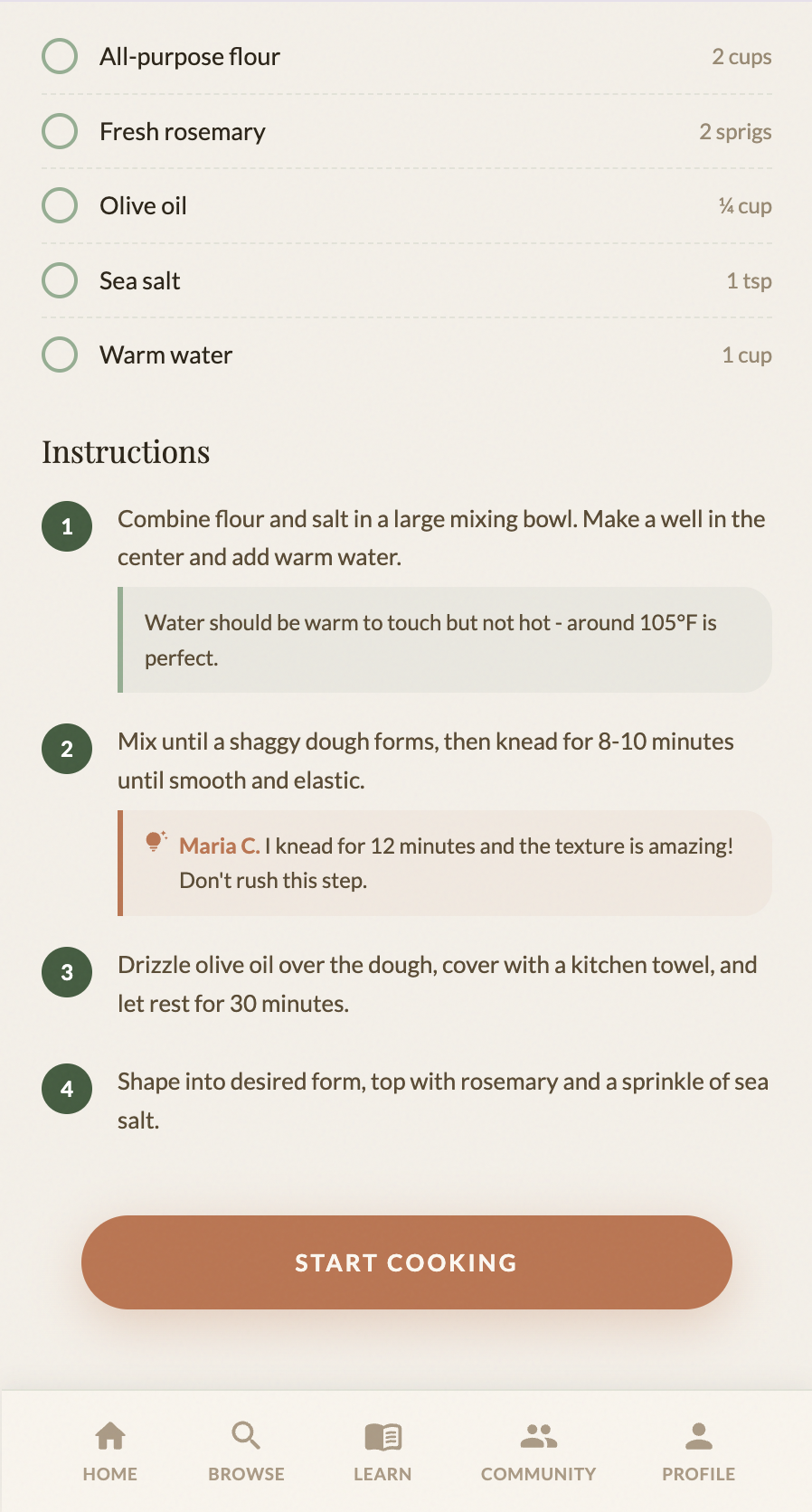
Cooking is communal. SageBook lets users share short tips, alternatives, or notes for each recipe step. Wondering if you can swap ingredients? Chances are someone else has done it and left a note.
This shared wisdom transforms recipes into living documents that adapt to real kitchens and cultures, strengthening the sense of community and collective learning.
Surfaced by the cultural model, which revealed that real-world cooking rarely matches published recipes — users constantly adapt based on what's in the fridge, dietary needs, and cultural preference.
These are the research findings that drove every design decision in SageBook. The 60% abandonment rate isn't a design failure waiting to happen — it's the exact problem the prototype is built to solve. By making cooking feel manageable, step-by-step, and adapted to the user's actual situation, SageBook aims to turn that statistic around.
The goal isn't just task completion — it's a shift in how people feel about cooking. Confident enough to try something new, calm enough to actually enjoy the process. The prototype is being designed to test whether that shift is achievable.